Daisies
Daisies / Sedmikrásky
Věra Chytilová, Czechoslovakia, 1966, 76′, sp + avp
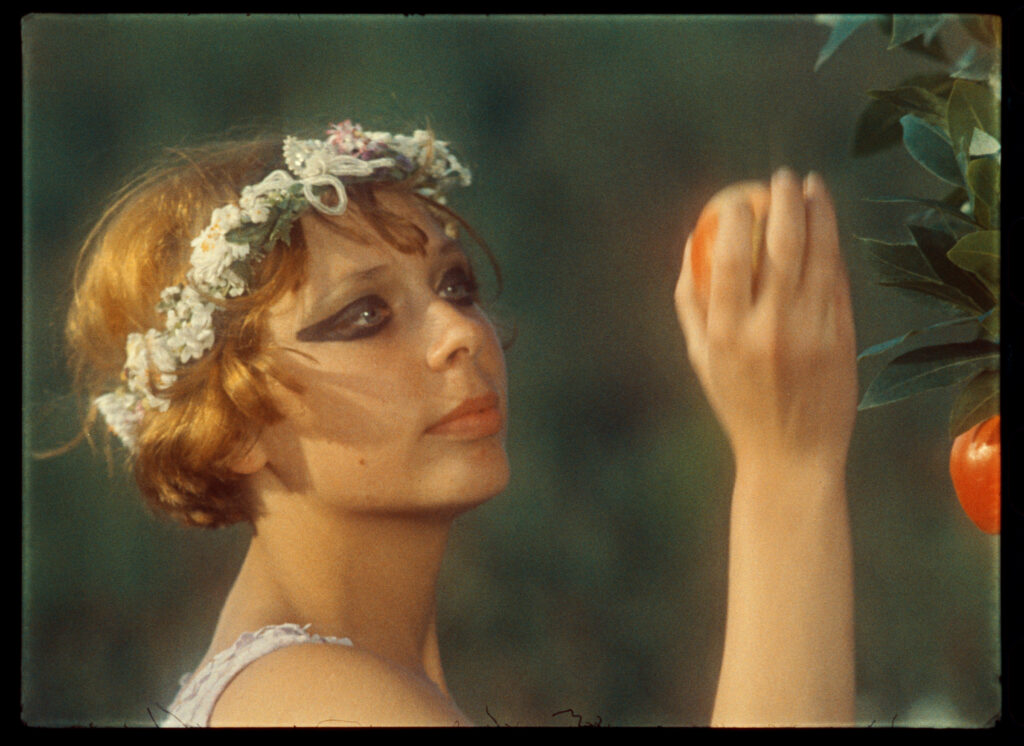
Teenagers Marie I and Marie II are passionately eager to dismantle the world of constraints, compartments, and rules of patriarchal culture. A gem of the Czech New Wave, the film is a blend of anarchy and cinematic experimentation. After Daisies, the Czechoslovak authorities banned Chytilová from making films for several years.
Screened with:
The Gratinated Brains of Pupilija Ferkeverk / Gratinirani mozak Pupilije Ferkeverk (16+)
Karpo Godina, Serbia, Slovenia (Yugoslavia), 1970, 11’, svp + avp
A collage of scenes shot in various lights and the iridescent hues of the sky, featuring a group of renowned artists, each scene expressing an unbridled desire for freedom.
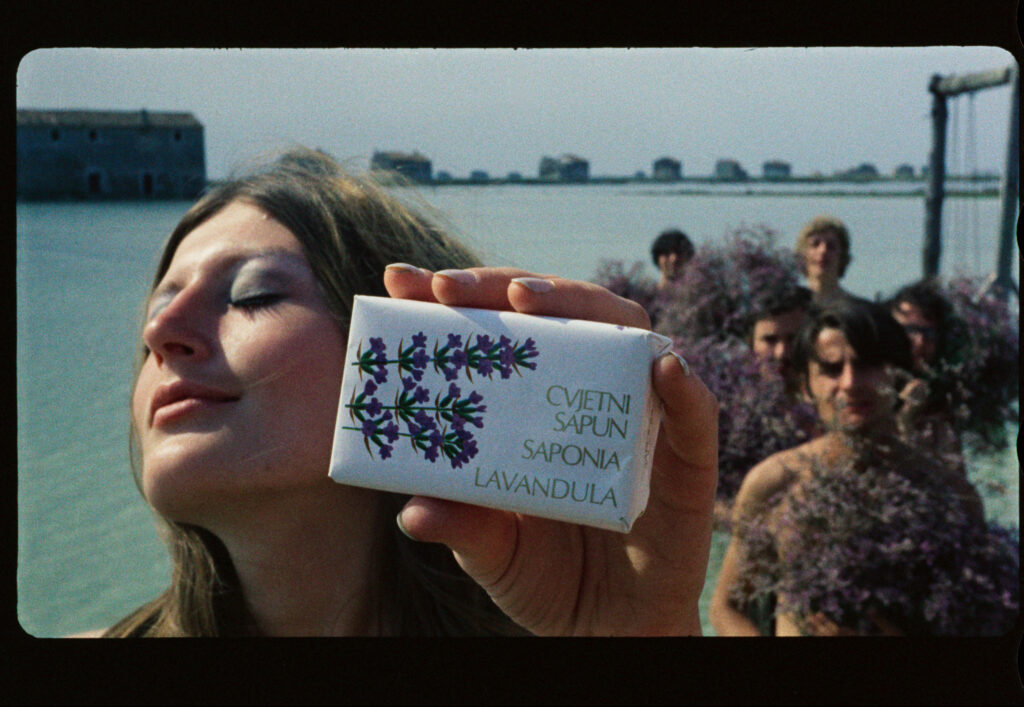
Gugalnica: A short film by young selectors inspired by the film The Gratinated Brains of Pupilija Ferkverk
As part of a collaboration with the Slovenian Cinematheque, young programmers over the age of 15 have, for the first time, chosen not one, but two films, which they will briefly introduce before the screening and then discuss with director and cinematographer Karpo Godina.
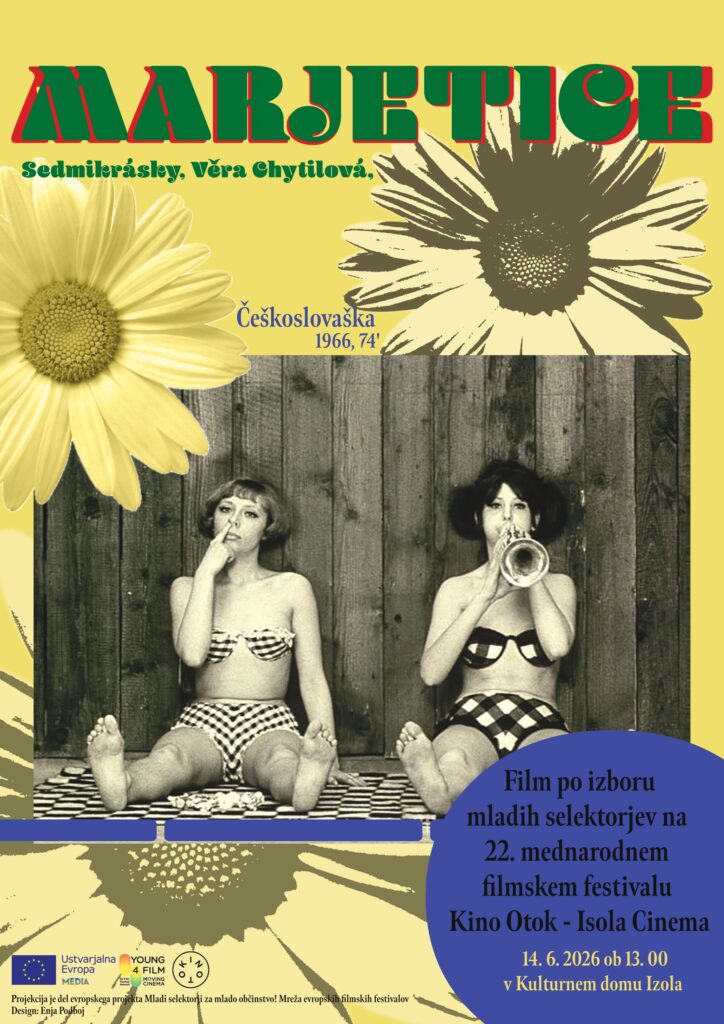
Film poster by young programmers, author: Enja Podboj
Potovanje v Marjetice: A short film by young selectors inspired by the film Daisies
A note from the Young Film Programmers about the selection:
Images of Freedom
For this year’s film festival programme, we, the Young Film Programmers, have selected films that captivated us at first sight. Daisies and The Gratinated Brains of Pupilija Ferkeverk are works that spoke to us not only through their stories, but above all through their imagery, rhythm, and bold editing. Both films are visually exceptional; the colours, compositions, and fragmented narrative flow create a cinematic experience that transcends the classic narrative.
We find it particularly important that both films criticise society in a provocative and uncompromising way. They use humour, irony, and absurdity to expose norms, consumerism, empty rituals, and social power structures. Their provocativeness is not an end in itself, but rather opens up space for reflection – about the world we live in and the role of the individual within it. We believe that both films are an excellent introduction to the world of experimental film for those who may not have encountered it before. At the same time, they offer enough layers, boldness, and aesthetic freshness to delight even viewers already familiar with experimental poetics.
The feature film Daisies follows two young girls, both named Marie, who decide that they – like the world around them – are »corrupted«. Through a series of fragmented, playful, and often absurd scenes, they engage in provocative games of seduction, manipulation, and the destruction of the rules of the society they are trying to tame. The story does not have a classic linear structure, but rather functions as a collage of situations that intensify the sense of chaos and rebellion. Daisies is an emblem of the Czech New Wave and a prominent example of experimental film that uses form as a political gesture. The alternation of black-and-white and colour images, the use of colour filters, rapid transitions, and sound effects create a sense of fragmentation of the world. The film uses absurdity and irony to attack patriarchal norms, control over women’s bodies, and the hypocritical morality of 1960s society. The symbolism – an apple, puppetry, food, dismemberment of objects – raises questions of power, sexuality, and freedom. Although it was created in a specific political context, it remains surprisingly relevant, especially in its criticism of the system that shapes, controls, and punishes the individual.
The short film The Gratinated Brains of Pupilija Ferkeverk explores the relationship between the individual and ideology through visual experimentation and distinct symbolism. Instead of a classic narrative, the film builds meaning through images, rhythm, and editing. The image of the »gratinated brains« becomes a metaphor for the shaping, transformation, and ideological processing of human thought. The film stands out for its playfulness and, at the same time, its sharp political undertones. The use of contrasts, unusual shots, and thoughtful editing creates a distance that forces the viewer into active interpretation. Like Daisies, this film shatters the illusion of a classic narrative film and becomes aware of itself as an artistic medium. It was created during a time of political restrictions on freedom of expression, so its experimentalism acts as a form of silent resistance.
The conclusions of both films raise the question: can rebellion be playful, absurd, and aesthetically luxurious, while also being politically sharp? Both films prove that the film form itself can be an act of freedom.
Authors: Enja Podboj, Lana Sirc, Vita Vehar, Lejla Naomi Butala, Uršula Stopar, Pia Gaberšček Škoa, Erazem Uršič Fratina, Olivia Jazbec Trpkova, and Mark Antonij Novak
The screening takes place as part of the project ‘Young Programmers for Young Audiences! European Film Festival Network’ with the support of Creative Europe MEDIA. The Young4Film network is coordinated by Kino Otok – Isola Cinema International Film Festival, network members are Beldocs International Documentary Film Festival (Serbia), Vilnius Short Film Festival (Lithuania), Piccolo Grande Cinema (Italy), Cinehill Film Festival (Croatia) and Valladolid International Film Week – SEMINCI (Spain).
Schedule
Date: 14. June 2026
Time: 13:00
Program category: Submarine
Section category: Submarine


